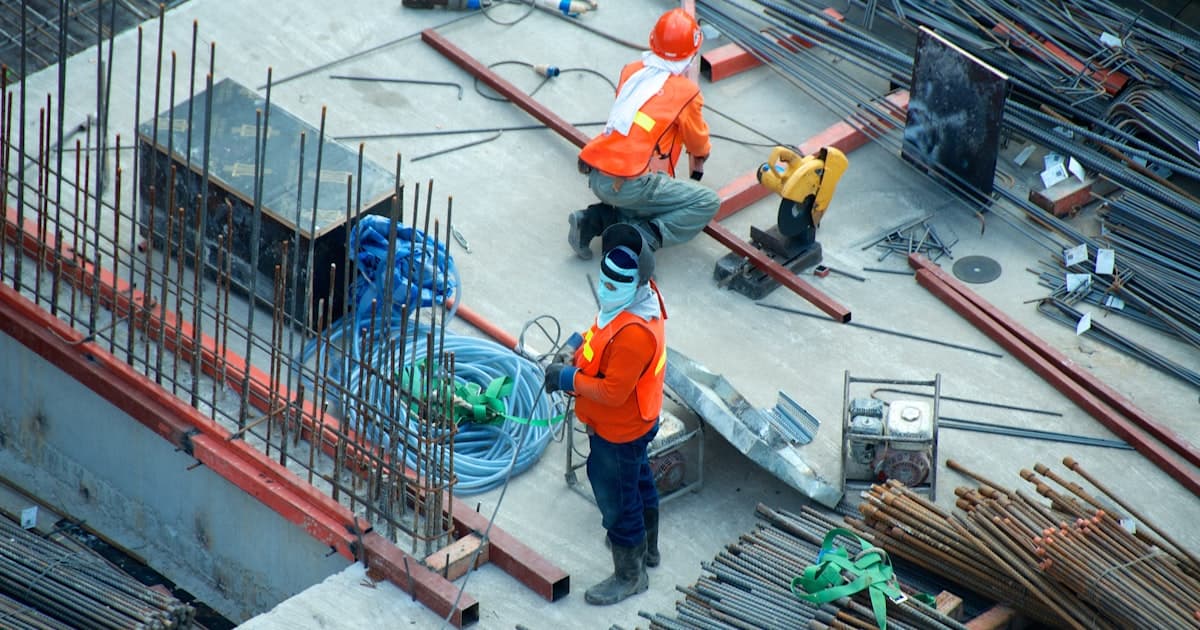
You walk a house, add up the work, and write one number in the rehab box. Then the walls open, the furnace is older than the listing said, and the one number you underwrote the whole deal on is the number that was never true.
A single-point rehab budget is a forecast dressed as a fact. It was survivable when margins were wide. It is not survivable now.
The margin that used to absorb an overrun is gone
The typical gross flipping margin was 21.5 percent in the second quarter of 2026, against 27.6 percent at the same point a year earlier.1 Call that six points of cushion that left the market in twelve months.
On a 300,000 resale, six points is 18,000. That is one unexpected foundation repair, or a furnace plus the rough-in work around it. The overrun did not get bigger. The room you had for it got smaller.
So the question stops being "what will the rehab cost" and becomes "at what rehab cost does this deal stop working". That is a range question, and it has a different answer.
What the contingency line is really for
Most investors already carry a contingency, usually as a percentage tacked onto the end. The common rule of thumb is 5 to 25 percent of repair costs.2 That range is wide because it is not one number either. It moves with the scope, the age of the house, and your own experience estimating.
A cosmetic rehab you have done ten times, in a house built in the last thirty years, can sit near 5 percent. A full gut where you are opening walls, with old wiring and a dated mechanical system, belongs at the top. One source worth repeating here: if you find yourself carrying more than 25 percent, that is not a contingency, that is a signal you do not trust the estimate and should get a construction professional to price it with you.2
The mistake is treating the percentage as the decision. The percentage is a shorthand. The decision is whether the dollars it produces cover the risks you already know about.
A percentage is not a budget. Dollars are.
Here is the arithmetic that makes the point, using the figures from a rehab estimating guide.2
Take a 60,000 gut rehab:
- 5 percent contingency is 3,000. It does not cover the known risks.
- 10 percent is 6,000. It covers the known risks and nothing unforeseen.
- 15 percent is 9,000. It covers the risks, and now you have to ask whether you can still submit a competitive offer.
Now take a 20,000 cosmetic rehab at 5 percent. That is 1,000. A furnace replacement can run to 4,000 on its own, so one failed furnace puts you 3,000 over budget on a project whose contingency looked responsible as a percentage.2
Two more lines belong in the same conversation, because they are routinely left out and they are not small:
- If a general contractor manages the project, that is typically 10 to 20 percent on top of direct costs. On 60,000 of work at 15 percent, that is 9,000, and the estimate becomes 69,000.2
- National-average pricing is not your pricing. In expensive coastal markets, the same scope can run 20 to 50 percent above the national average.2
Stack those honestly and the rehab line is never one number. It is a low case and a high case, and the gap between them is often larger than the profit you are underwriting.
Test the deal at the top, not the middle
This is the habit worth building, and it costs one extra minute.
Run the deal twice. Once at your mid rehab number, which is the one you would have written in the box anyway. Once at the top of your range, meaning the mid number plus the contingency that actually covers your known risks, plus the contractor's fee if you are not managing it yourself, plus the location adjustment if your market runs above national average.
Then look at the second answer, not the first. If the deal still clears your profit threshold at the top of the range, you have a deal with room in it. If it only clears at the middle, you do not have a deal, you have a bet on the estimate being right. If it fails at both, you have saved yourself a walkthrough.
The reason to do it in that order is psychological. Underwrite at the mid and the high case feels like a worst case you will probably dodge. Underwrite at the high and the mid becomes upside. Same arithmetic, better decisions.
A worked version, with the purchase and resale figures assumed for the arithmetic only. Assume a 300,000 ARV, a 200,000 purchase, and the 60,000 gut rehab above. At the mid, all in is 260,000 and the spread to ARV is 40,000 before closing, holding and selling costs. At the top, with a 15 percent contingency and a 15 percent contractor fee, the rehab is closer to 78,000, all in is 278,000, and the spread is 22,000 before those same costs. The first version looks like a deal. The second version is the one you have to be willing to live with.
Doing it on iComps
The point of an ARV that comes from real sold comps is that only one side of the equation stays uncertain. On iComps you enter the address, and the platform pulls the sold comparables, shows the adjustments it made, and labels the comp confidence as High, Medium or Low with the number of comps behind it. You can see what the valuation rests on rather than taking a single number on faith.
The deal panel takes the renovation cost as an input you control, which is what makes the two-run habit practical. Enter your mid rehab number, read the profit. Change the renovation figure to the top of your range, read it again. The ARV side does not move, so the difference you see is purely the cost of being wrong about the rehab, which is exactly the number you want before you make an offer.
On our own platform, every analysis that started on 2 October reached an ARV, three of three.3 That is a small sample and we would rather say so than round it into a claim.
Start a deal at icomps.io/calculate.
The one thing to do next
On the next deal you underwrite, write two rehab numbers instead of one, and make the offer against the higher of them. If the deal only works at the lower number, pass. The market gave back six points of margin in a year, and the cheapest way to protect what is left is to stop pretending the rehab line is a fact.
Footnotes
-
ATTOM, "Home Flipping Profits Continue Gradual Two-Year Decline", 2026-10-01, data period Q2 2026: https://www.attomdata.com/news/market-trends/flipping/home-flipping-profits-continue-gradual-two-year-decline/ ↩
-
FlipperForce, "Estimate Adders", read 2026-10-03: https://flipperforce.com/how-to-flip-houses/chapter-5-how-to-estimate-rehab-costs/estimating-adders ↩ ↩2 ↩3 ↩4 ↩5 ↩6
-
iComps internal analytics, growth.funnel.ARV_viewed.stepConversionPct and growth.funnel.ARV_viewed.count, covering 2026-10-02. ↩